Public Swimming Pool Safety: Key Risk Controls for Facility Operators

Public swimming pool safety depends on layers of protection. Facility operators can help reduce drowning, injury and liability exposures by controlling access, setting and enforcing rules, maintaining walking surfaces and visibility, preparing for emergencies and addressing electrical hazards.
Drowning can happen quickly and is often silent. The Centers for Disease Control and Prevention (CDC) identifies drowning as preventable. Public swimming pool safety programs should combine physical safeguards with trained staff, consistent procedures and compliance with applicable requirements.
Control Access to the Pool Area
- Use barriers and gates designed to restrict unauthorized entry. Confirm fence height, gate hardware, spacing and other details against applicable state and local requirements.
- Keep gates self-closing and self-latching, and secure access points when the pool is closed.
- Inspect barriers routinely for damage, gaps, propped-open gates or other conditions that could defeat access control.
Post Rules and Provide Appropriate Supervision
- Post clear rules at entrances and other decision points, and enforce them consistently.
- Identify operating hours, supervision expectations, prohibited conduct and emergency contact information.
- Define staff responsibilities for opening, monitoring and closing the facility. Maintain an incident-reporting process and review events for corrective action.
- Where lifeguards are required or provided, confirm that staffing, certification, zone coverage and ongoing training meet applicable requirements.
Reduce Slip, Trip and Fall Hazards
- Maintain pool decks and walking surfaces in even, slip-resistant condition.
- Address standing water, cracks, deterioration, unsecured mats and other hazards promptly.
- Keep paths, exits and access to rescue equipment clear. Document routine inspections and corrective actions.
Maintain Depth Markings and Visibility
- Provide visible, code-compliant depth markings where swimmers enter the water and along the pool perimeter.
- Clearly identify transitions to deeper water using markings, safety lines or other controls required for the facility.
- Maintain lighting and water clarity so staff can observe swimmers and identify hazards. Confirm design and operating requirements with the authority having jurisdiction.
Keep Emergency and Rescue Equipment Ready
- Provide rescue equipment appropriate for the pool and required by applicable rules, such as a reaching pole or a life ring with a throwing line.
- Place equipment in visible, unobstructed locations and inspect it on a documented schedule.
- Maintain an emergency action plan that addresses rescue, first aid, cardiopulmonary resuscitation, automated external defibrillator use, emergency communication and access for responders.
- Train staff on the plan and conduct drills appropriate to the facility’s operations.
Address Electrical Hazards
- Have a qualified professional evaluate electrical equipment and installations near the pool.
- Use ground-fault circuit interrupter (GFCI) protection where required, and test and maintain devices according to applicable codes and manufacturer instructions.
- Remove damaged electrical equipment from service and keep cords and portable devices away from wet areas unless specifically designed and approved for that use.
Build Public Swimming Pool Safety Into Routine Operations
- Use written opening, operating and closing checklists.
- Train staff on pool rules, hazard recognition, emergency response and incident reporting.
- Review controls after incidents, facility changes or changes in applicable requirements.
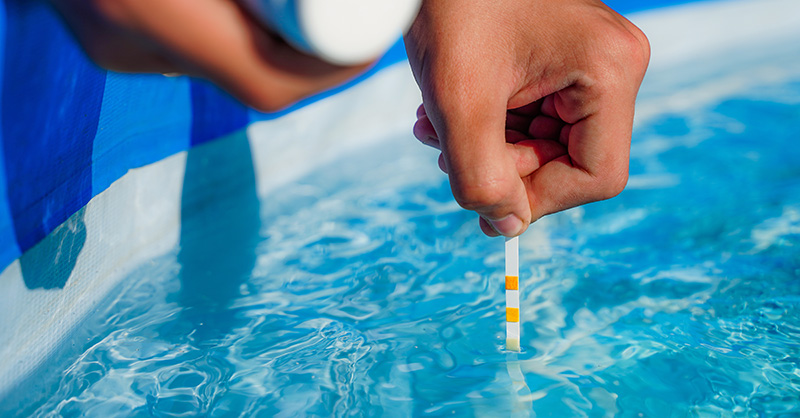
- Coordinate water quality, chemical handling, maintenance and drain-entrapment controls with qualified personnel and current regulatory guidance.
Key Takeaways for Public Swimming Pool Safety
- Use layered controls rather than relying on a single safeguard.
- Restrict unauthorized access and enforce facility rules consistently.
- Maintain walking surfaces, visibility, rescue equipment and emergency readiness.
- Have qualified professionals address electrical systems and other technical hazards.
- Confirm all practices against current state and local requirements, adopted codes and manufacturer instructions.
Frequently Asked Questions (FAQ)
The core controls are secure access, clear rules and supervision, safe walking surfaces, visible depth information, ready rescue equipment, emergency planning and qualified oversight of electrical hazards.
Use layers of protection, including access control, appropriate supervision, staff training, emergency planning, rescue equipment and consistent enforcement of pool rules.
Equipment depends on the facility and applicable requirements. Common examples include reaching equipment, a life ring with a throwing line, first-aid supplies, emergency communication equipment and an automated external defibrillator when required or appropriate.
Set documented inspection frequencies based on facility use, applicable requirements, manufacturer instructions and the type of control. Correct urgent hazards promptly and record the action taken.
A Practical Approach to Safer Pool Operations
Public swimming pool safety improves when operators apply simple controls consistently and verify that technical practices remain current. Use this guidance as a starting point, then adapt it to the facility’s design, users, staffing and legal requirements.
This article provides general risk-management information. It does not replace applicable laws, codes, standards, manufacturer instructions or professional advice.