hands typing on computer

CLAIMS

Claims Service and Expertise

When you need to make a claim, you want to work with experts who understand your loss and what to do. That’s why at Great American, our claims professionals specialize in the markets they serve. We'll pair you with claims professionals who have deep industry experience and understand your organization’s specific needs.

What do I need to report a claim?

  1. Your Name

  2. Your contact information (address, phone number and email)

  3. Your connection to the claim (For example, are you the policyholder, the agent, an injured party or a witness?)

  4. A Great American policy number (as available)

  5. The type of loss – auto, property, workers comp, general liability

  6. Details of what happened

Report a claim

Other Contacts

Workers' Compensation Claims

Electronic Billing Information

Medical providers can submit bills directly through the Data Dimensions electronic billing system. If you have questions, contact Data Dimensions.

Claims Payments Via Electronic Funds Transfer

To receive Workers' Compensation claims payments electronically, complete this form, and email or mail it to our offices (as noted on the form).

Not sure where to go?

If you're not sure how to proceed, contact our Call Center team.

844 GAIG NOW (844-424-4669)
Option 1: new claims
Option 2: existing claims.

Please call during our regular business hours of 8:00 a.m.-5:00 p.m. Eastern.

Additional Resources

Our claims professionals specialize in the markets they serve.
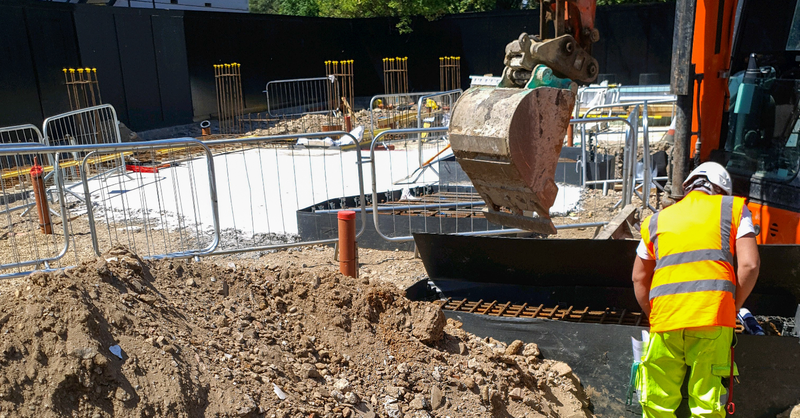
Construction Hand Safety: The Benefits of a 100% Glove Policy on Job Sites

Mar 31, 2026, 11:06 AM
Improve construction hand safety with a 100% glove policy. Learn key benefits, implementation steps, glove selection considerations and documented exceptions.
construction hand safety; benefits of a 100% glove policy; construction safety gloves; hand injury prevention in construction; PPE gloves construction; task‑appropriate gloves; ANSI/ISEA 105 glove ratings; construction safety best practices
Improve construction hand safety with a 100% glove policy. Learn key benefits, implementation steps, glove selection considerations and documented exceptions.
Author : Great American Insurance Group
Social media title : Construction Hand Safety: Benefits of a 100% Glove Policy - Loss Control - Great American Insurance Group
Open graph title : Construction Hand Safety: Benefits of a 100% Glove Policy - Loss Control - Great American Insurance Group
Meta Title : Construction Hand Safety: Benefits of a 100% Glove Policy - Loss Control - Great American Insurance Group
Published Date : Mar 30, 2026, 23:00 PM

Hand injuries remain one of the most frequent—and preventable—sources of loss on construction sites. Cuts, punctures, burns and chemical irritation often occur during routine work involving tools, sharp materials, hot surfaces and hazardous substances.

While no single control eliminates risk, many organizations have strengthened construction hand safety by adopting a 100% glove policy. 

Why Construction Hand Safety Matters

Construction tasks routinely expose hands to multiple injury risks. Common sources of injury include:

  • Cuts and lacerations from blades, sharp edges, sheet metal and building materials
  • Punctures from nails, wire, fasteners and job‑site debris
  • Crush and pinch injuries from material handling and moving equipment
  • Thermal burns from welding, hot surfaces, steam and heated components
  • Chemical irritation or burns from adhesives, solvents, coatings and wet cement

Improving construction hand safety often means reducing exposure during everyday tasks—especially brief or unplanned work where protection may otherwise be overlooked.

What Hand Injury Trends Commonly Show

Across many construction operations, incident reviews reveal a recurring pattern: gloves were not worn, were not readily available or were not appropriate for the task being performed. While exact percentages vary, the overall trend supports the value of consistent glove use and proper glove selection as part of an effective construction hand safety program.

Benefits of a 100% Glove Policy

A 100% glove policy supports construction hand safety by simplifying expectations and reducing gaps in protection. Key benefits of a 100% glove policy include:

  1. Reduced ambiguity in the field. Workers do not need to decide moment‑by‑moment whether gloves are required, reducing exposure during quick or unexpected tasks.
  2. Improved readiness for changing conditions. Routine glove use increases the likelihood that workers are protected when hazards arise unexpectedly.
  3. Clear and enforceable expectations. Simple, consistent rules are easier to communicate, supervise and reinforce across crews and subcontractors.
  4. Greater focus on proper glove selection. Supervisors and safety leaders can concentrate on matching gloves to hazards rather than debating whether gloves should be worn.
  5. Stronger safety culture signals. A universal expectation reinforces a visible commitment to injury prevention and personal protection.

Key Steps for Implementing an Effective Glove Policy

An effective glove policy extends beyond a general requirement. Successful programs typically include the following elements.

  1. Conduct task‑specific hazard assessments. Identify exposures such as cuts, punctures, impact, heat, cold, chemicals and vibration, and document how glove types align to those hazards.
  2. Match gloves to the hazard. Use manufacturer performance data and applicable standards—such as partnerANSI/ISEA 105 cut, puncture and abrasion ratings—to guide selection. Chemical‑resistant gloves should be verified for compatibility with site‑specific substances.
  3. Address known limitations. No glove protects against every hazard. Policies should acknowledge reduced dexterity, potential entanglement hazards near rotating equipment and material degradation in chemical or high‑heat environments. Documented exceptions and alternative controls should be defined where glove use introduces a different risk.
  4. Train workers and supervisors. Training should cover how to select task‑appropriate gloves, inspect and replace gloves, recognize when gloves may not be appropriate and report fit or comfort issues.
  5. Ensure availability and comfort. Provide multiple sizes and models and involve workers in evaluating comfort and performance. Compliance improves when gloves fit well and do not interfere with work.
  6. Reinforce through routine communication. Integrate glove expectations into job hazard analyses, toolbox talks, onboarding and day‑to‑day supervision. Repetition helps normalize safe practices.

Important Considerations and Limitations

A 100% glove policy should support safe operations while remaining flexible enough to address task‑specific risks. Common considerations include:

  • Rotating equipment: Gloves may increase entanglement risk and may require a documented exception process.
  • Electrical work: Voltage‑rated gloves and additional controls may be required.
  • High‑precision tasks: Thin or specialty gloves may be needed to maintain dexterity.
  • Hazard compatibility: Chemical and heat resistance must be validated using manufacturer specifications.

A Practical Path to Better Construction Hand Safety

Hand injuries continue to be a leading source of preventable construction losses. A thoughtfully implemented 100% glove policy can reduce common injury exposure by simplifying expectations, promoting readiness and reinforcing consistent protective practices.

Construction hand safety improves most when glove policies are paired with task‑specific hazard assessments, appropriate glove selection, reliable availability, supervisor involvement and a culture that encourages workers to speak up about both risks and limitations.

Key Takeaways

  • Hand injuries are among the most common and preventable construction incidents
  • Construction hand safety improves with consistent, task‑appropriate glove use
  • The benefits of a 100% glove policy include reduced ambiguity and improved readiness
  • Effective policies include training, proper glove selection and documented exceptions

    Frequently Asked Questions (FAQ)


    Categories :
    • Employee Wellness
    • Workplace Safety
    Tags :
    Divisions :
    • Loss Control
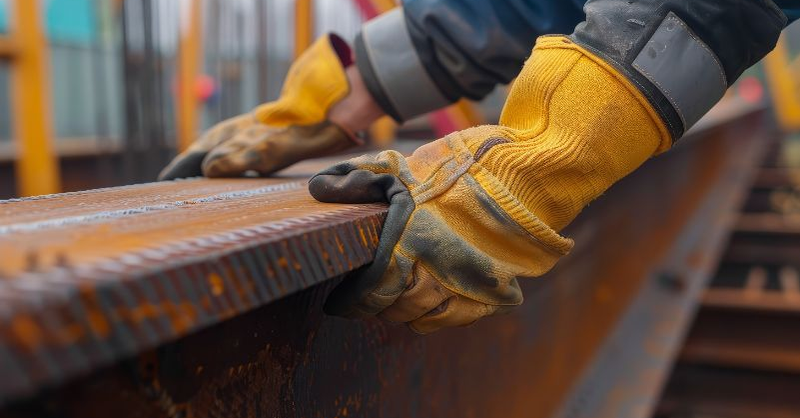
    Construction worker wearing protective safety gloves while handling steel materials on a job site, demonstrating construction hand safety, proper PPE glove use, and hand injury prevention through a 100% glove policy.