CLAIMS
Claims Service and Expertise
When you need to make a claim, you want to work with experts who understand your loss and what to do. That’s why at Great American, our claims professionals specialize in the markets they serve. We'll pair you with claims professionals who have deep industry experience and understand your organization’s specific needs.

A Guide for Your Claims Reporting Experience
Our claims professionals stand ready to help when the unexpected happens. Watch this short video to understand the multiple ways you can report a claim to help ease your experience as you navigate the claims process.

Specialty Claim: Expertise When It Matters Most
When it comes to making a claim, you deserve experts who truly understand your industry and share your priorities. Discover how our dedicated Claims teams bring deep industry-specific expertise to support you when you need it most.

SIU: Keeping the Promise
Your business's unique risks require specialized support. When you buy insurance, you're buying the promise that we can meet our obligations to you. Discover how our Special Investigation Unit (SIU) helps ensure we keep that promise, even when the unthinkable happens.

Expert Claims for Your Cyber Event
A cyber event is one of the most pressing things a business owner can face, with the potential for both legal and financial ramifications. Discover how we work collaboratively with our insureds and vendor response team to help restore your environment.

Workers' Comp: Data & People Make the Difference
By using data-driven insights, our skilled claim professionals can select providers focused on quality care. This helps injured workers recover and delivers superior outcomes for both workers and insured clients.
What do I need to report a claim?
-
Your Name
-
Your contact information (address, phone number and email)
-
Your connection to the claim (For example, are you the policyholder, the agent, an injured party or a witness?)
-
A Great American policy number (as available)
-
The type of loss – auto, property, workers comp, general liability
-
Details of what happened
Report a claim
Other Contacts
Workers' Compensation Claims
Electronic Billing Information
Medical providers can submit bills directly through the Data Dimensions electronic billing system. If you have questions, contact Data Dimensions.
Claims Payments Via Electronic Funds Transfer
To receive Workers' Compensation claims payments electronically, complete this form, and email or mail it to our offices (as noted on the form).
Not sure where to go?
If you're not sure how to proceed, contact our Call Center team.
844 GAIG NOW (844-424-4669)
Option 1: new claims
Option 2: existing claims.
Please call during our regular business hours of 8:00 a.m.-5:00 p.m. Eastern.
Additional Resources
Our claims professionals specialize in the markets they serve.
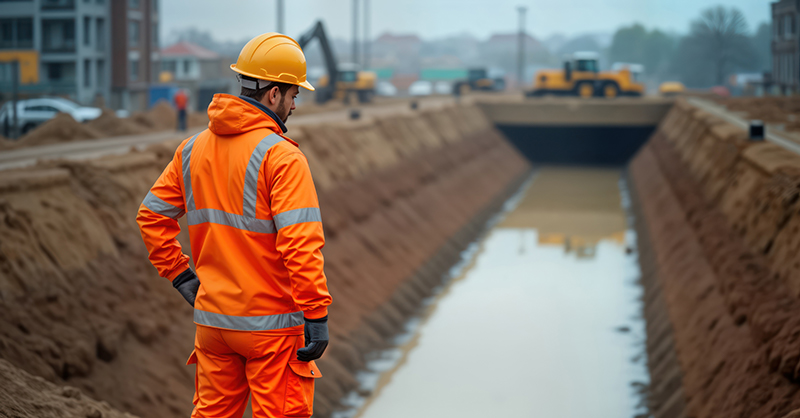
Trenching and Excavation Safety: Quick Guide to Preventing Hazards
Trenching and excavation are common types of work on construction and utility projects, but can present unique and significant hazards when work is active. The primary hazard is the collapse of trench/excavation walls.
Proper planning and adherence to safe practices can help prevent accidents and ensure the safety of workers. Below are key safety measures your organization can follow to help ensure safer trenching and excavation operations.
Preplanning: Your First Step to Safe Trenching and Excavation
Effective preplanning is crucial for trenching and excavation safety. Before any digging begins, it is essential to identify and mark underground utilities to avoid damaging them. This is where calling 811 comes into play, connecting you to a local service that will mark underground utility lines, so you know where it's safe to dig.
Steps for Preplanning
- Call 811: Contact the service at least 2-3 business days before starting any excavation activity.
- Mark Utilities: Ensure all underground utilities are accurately marked and identified.
- Assess Soil Stability: Evaluate the soil to determine its stability and classify it accordingly.
- Plan Job Layout: Identify safe locations for spoil piles and routes for heavy equipment.
- Develop Emergency Plans: Create a trench emergency action plan and ensure all workers are familiar with it.
Some Top Safety Protocols for Trenching and Excavation Work
Protective Systems
- Shoring: Use supports such as planking or hydraulic jacks to prevent trench walls from collapsing.
- Shielding: Employ trench boxes to shield workers from cave-ins.
- Sloping and Benching: Adjust the trench walls to prevent soil from falling in.
General Safety Measures
- Keep Heavy Equipment Away: Maintain a safe distance between heavy equipment and trench edges.
- Soil Management: Keep excavated soil and materials at least 2 feet from trench edges.
- Atmospheric Testing: Test for hazardous fumes and gases, especially in trenches deeper than 4 feet.
- Proper PPE: Ensure all workers are equipped with appropriate personal protective equipment.
Additional Resources
The Federal Occupational Safety and Health Administration (OSHA) has developed the following resources to assist employers with maintaining worker safety during trenching and excavation operations:
- Trenching and Excavation Guide
- Daily Inspection Checklist for Trenching/Excavation Sites
- Trenching and Excavation Safety Talk Document
By following these best practices and using a daily checklist, you can create a safer work environment for trenching and excavation projects.
- Construction Safety
- Employee Wellness
- Loss Control
- Workplace Safety
- Loss Control