
Condo Projects: Unmasking the Risks and Contractual Provisions To Consider

Why are insurance carriers reluctant to insure design professionals on condo projects?
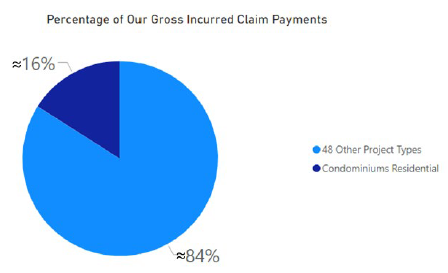
Approximately 16% of Great American's total gross incurred for design professional claims were for condo project claims, despite a conservative underwriting appetite. Once filed, condo defect lawsuits usually last years, are difficult to resolve, and the costs of defending them can be staggering.
The Plaintiffs: Who’s Behind Condo Project Claims?
Condo project claims are brought by individual unit owners, the managing association, or both, depending on who owns the portion of the building involved. Like many residential projects, condo owners often have unrealistic expectations. This is especially true for first- time homebuyers, who may be drawn to condos under the false assumption that these properties are maintenance and problem-free.
Managing Associations and Maintenance Failures
Condo buildings are typically managed by associations that collect assessments from unit owners. Unfortunately, these assessments are often insufficient to cover the long-term maintenance needs of the property, leading some associations to cut costs and neglect necessary upkeep. When a building faces expensive problems and the association lacks the funds to address them, litigation is frequently the outcome. Associations and unit owners can be challenging plaintiffs to negotiate with. Often, they demand unreasonable settlements and refuse to make realistic concessions.
Contingency Fee Lawyers and Condo Defect Claims
We’ve all heard of ambulance chasers, but what about condo collectors? Contingency fee law firms have started to solicit associations as clients and have even teamed up with forensic design firms to review buildings for errors. These firms intimidate association board members by highlighting that board members could be held personally responsible if they know of a problem and do not take legal action on behalf of the owners before the statute of limitations ends.
The Vanishing Developer
Many developers operate through single-purpose LLCs and dissolve after the sale of a condo project. It could take years for project issues to present and a claim to be pursued. This could leave the design professionals and contractors holding the bag. A judgment-proof developer could have a significant impact on the exposure of a design professional depending on the state’s joint and several liability law. Plaintiffs may be able to collect the full amount of a judgment from any defendant, and those with available insurance will be the target.
The Magnitude of Exposure: Replication of Design Flaws
For condo projects, even a small design flaw could result in significant liability due to its replication.
Contractual Covers to Consider
Given the risks involved in condo projects, a well-crafted contract is essential to help protect your business. Developers are often highly sophisticated in negotiating contract terms, so negotiating terms could be an uphill battle, but once won, worth the effort.
- Define Scope of Services Clearly
Make sure your scope of services is clearly detailed. Not just the services you are providing, but also highlight any notable services you are not providing. Developers may seek basic design services to cut costs. Make sure that these concessions do not compromise design integrity, and that the developer’s cost-cutting is memorialized in the contract. - Retain Ownership of Your Design
Contractually retain ownership of your design to prevent the developer from reusing it on other projects. If the developer insists on owning the design documents, require written consent before any use beyond the current project. - Cost-Cutting
Cost-cutting decisions can compromise your design. Make sure the contract requires your approval before any design, material, or equipment changes are made. If the developer proceeds against your recommendation, ensure the contract states the developer assumes all risks related to those decisions. - Building Envelope Consultant
Building envelope issues are a leading cause of condo defect litigation. If possible, require the developer to hire a qualified consultant to assess and address potential moisture-related issues. - Developer Contracting with Subconsultants
As the design lead, you may be held responsible for the actions of your subconsultants. To avoid vicarious liability, have the developer engage large scope subconsultants directly. As with any project, make sure all subconsultants have adequate professional liability insurance. - Indemnity and Additional Insured Provisions
Given the inherent risks of condo projects, require the developer and general contractor to indemnify and hold you harmless against damages, liabilities, and legal costs arising out of or in any way connected with the services performed under your contract, except for your negligence or willful misconduct. Also, ensure that you are named as an additional insured under the contractor’s general liability policy. - Limit of Liability
Incorporate a limit of liability clause that caps your exposure to a specific dollar amount—typically your project fee or your available insurance limits. This helps ensure that your financial risk is manageable and predictable. - Contingency Fund and Project Insurance
To avoid underfunded projects, require the developer to maintain a contingency fund for unexpected expenses. For high-risk projects, consider requiring the developer to secure an Owner-Controlled Insurance Program (OCIP) covering your services and with an extended reporting period to address post-completion claims. - Condo Declarations, By-laws and Maintenance
Since condo documents are often not drafted at the time the design agreement is signed, it’s critical to include provisions in your contract with the developer to ensure certain clauses are added to the condo documents. This is crucial because associations and unit owners typically do not have contractual privity with design professionals, which may hinder the enforcement of contract terms in a lawsuit.
Some key provisions to include in condo documents: - Require the condo association and unit owners to maintain adequate property insurance, with a waiver of subrogation for the developer, architect, and contractor.
- Specify that a 75% unit-owner vote is required to initiate a lawsuit.
- Include a waiver of consequential damages against the developer, architect, and contractor, and disclaim warranties such as merchantability or fitness for a particular purpose.
- Require unit owners to conduct a pre-closing inspection.
- Include dispute resolution mechanisms such as a “Right to Cure” provision, which allows parties the opportunity to fix defects before a lawsuit is filed, and a pre-suit mediation requirement.
- Detail the association’s and unit owners’ maintenance obligations.
- Maintenance Manual
Poor maintenance is often at the heart of condo defect cases. Contractually require the developer to provide a maintenance manual to ensure that recommendations for proper maintenance are documented.
Your Contract: The First Line of Defense
A solid contract serves as protection against some of the risks of condo projects. Be sure to take advantage of resources available to you—such as contract reviews—before executing any agreements. Our claims team is here to support you in navigating these complexities, ensuring that your contractual safeguards are in place.

)