Reading the Risk: What Goes into an Environmental Site Evaluation
Environmental regulations shape how facilities control contaminants, investigate releases and manage cleanup obligations. All these factors shape the overall environmental risk of a site or operation. Understanding how these pieces fit together can give brokers greater insight into what risk engineers consider when evaluating an account.
It Starts with the Site
Federal regulations address different aspects of environmental risks. The Clean Water Act regulates pollutant discharges into waters through the use of permit limits, while the Resource Conservation and Recovery Act, or RCRA, addresses solid or hazardous waste generated at operating facilities. The Comprehensive Environmental Response, Compensation, and Liability Act, commonly known as CERCLA or Superfund, provides a framework for abandoned or uncontrolled contaminated-site cleanup and assigning financial liability to responsible parties.
Which requirements apply depends on the operations, site conditions and environmental concerns involved.
Follow the Pathway
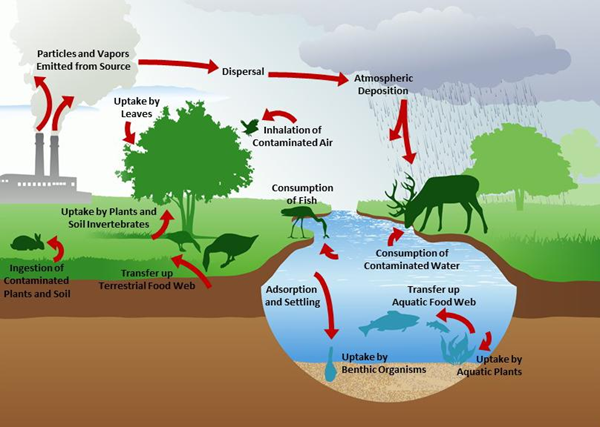
The presence of a contaminant is only one consideration. Another is how either an individual, wildlife or fauna could potentially be exposed.
Direct contact with contaminated soil, ingestion of groundwater and inhalation through vapor intrusion are examples of exposure pathways that can connect site conditions to potential health impacts. Land use matters too. A risk-based cleanup strategy may look different depending on the site’s intended use and anticipated exposure. Cleanup of a release for a future residential development is much stricter than for a planned commercial or industrial use.
From a Release to Closure

When a spill or discharge occurs, applicable reporting thresholds may trigger regulatory notification. Beyond the immediate response, releases can result in cleanup obligations, fines, penalties or third-party claims.
Even after remediation, contamination may not always be completely removed. Site closure can involve a no-further-action determination, institutional controls, or engineering controls designed to manage any remaining contamination and exposure risks.
Every Site Has Its Own Story
State requirements can add another layer, sometimes of complexity and sometimes to streamline. These state standards may be more stringent than federal requirements for voluntary cleanup to aid in brownfield redevelopment. The contaminants themselves can also vary widely, from volatile and semi volatile organic compounds and petroleum hydrocarbons to metals, PCBs, pesticides and emerging contaminants.
For brokers, the bigger picture comes from connecting the dots: What contaminants are present? How could exposure occur? What cleanup has taken place? What controls or obligations remain? Those details can provide valuable context when discussing an account’s environmental exposures.